First: there is no single "roof job"
Roof work is a ladder of scopes, and most quote confusion is two people picturing different rungs:
- Spot reseal — one or a few failed points (a vent, a skylight, the AC gasket) cleaned and resealed.
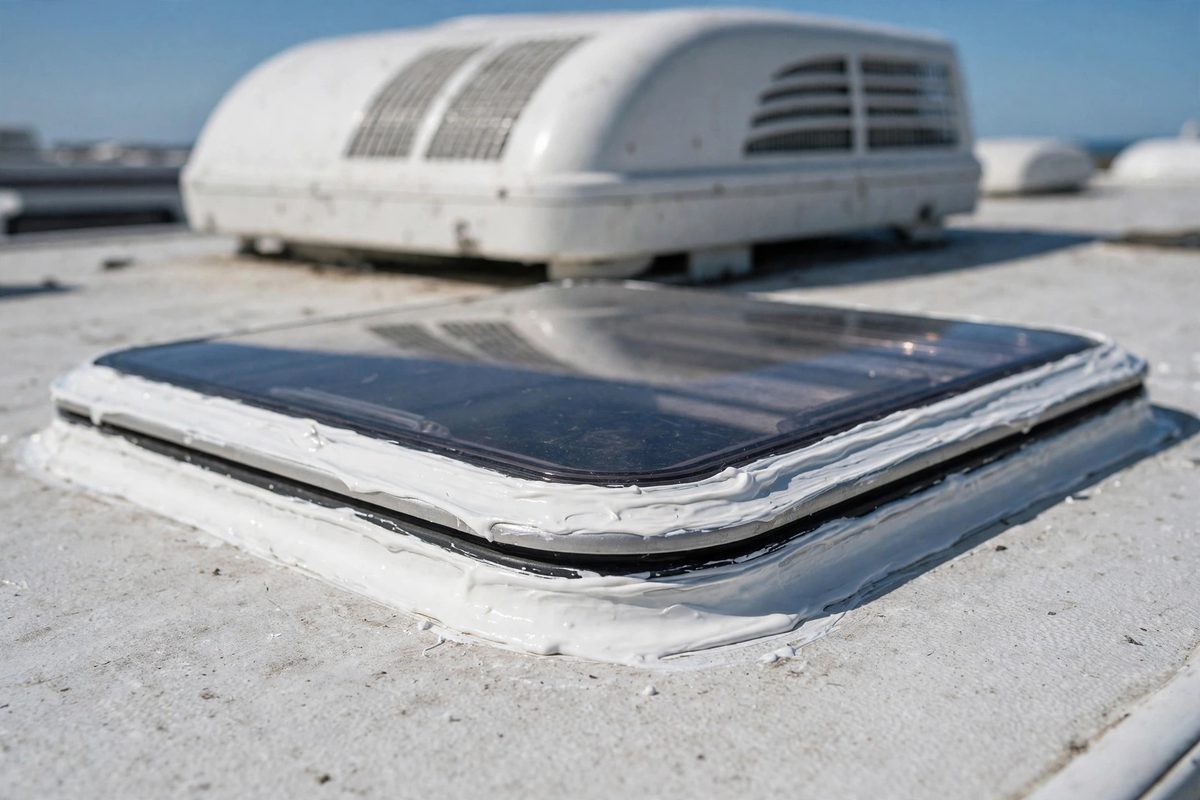
- Full reseal — every penetration and seam on the roof: vents, skylights, antennas, cap seams, trim. The standard preventive job on a sound roof.
- Membrane section repair — a torn, punctured, or worn area of the membrane itself cut out and patched or re-covered.
- Full recoat — an elastomeric coating system over the whole membrane, sold as a life-extender for a roof whose surface is aging but whose structure is still sound.
- Deck and interior repair — the rung nobody wants: rotted roof decking, soaked insulation, stained ceiling panels, mold remediation. This is no longer sealant work; it's reconstruction, and it's priced like it.
A quote only makes sense once you know which rung you're on — and an honest inspection is what tells you. Be wary of any quote given without one.
The factors that move the number
- Scope, above all. A spot reseal and a full reseal differ by the better part of a day's labor. A recoat adds a materials system and multiple passes. Each rung up multiplies work, and comparing quotes across rungs is comparing different jobs.
- Roof size and clutter. Length matters, but so does what the tech has to work around: multiple ACs, solar panels, satellite dishes, and slide toppers all slow the work and add penetrations to seal.
- Roof material. EPDM rubber, TPO, and fiberglass take different sealants, tapes, and prep. The wrong product on the wrong membrane fails early, so material identification is part of the quote, not a detail.
- The condition of the old sealant. Prep is most of the labor in a reseal. Old sealant has to come off — and a roof previously patched with hardware-store silicone is the expensive version, because silicone contaminates the surface and has to be fully removed before proper lap sealant will bond.
- What's underneath. A dry roof is a surface job. A roof that has leaked quietly through a rainy season can hide wet insulation, soft decking, and mold under intact-looking membrane. That damage is only fully visible once work starts, which is why good quotes separate what's certain from what's contingent (see the supplement rule below).
- Parts vs. labor. Sealant, tape, and coating materials are the smaller half of most roof quotes; skilled hours — scraping, masking, applying, inspecting — are the larger half. A quote that lists neither is a quote you can't compare.
- Mobile vs. shop. Mobile work trades the tow, the drop-off, and the shop's schedule for a tech at your site; shop work bundles facility overhead and indoor time. Neither is automatically cheaper for the same scope — you're paying for different things, and in snowbird season the shop version also costs you weeks of waiting.
How quotes are typically structured
- A service-call or inspection fee gets the tech on the roof. Ask whether it's credited toward the work if you proceed — both arrangements exist.
- A written scope, by area — which penetrations and seams are included, what products by name, and whether old sealant is removed or coated over (and why).
- Materials and labor shown separately, or at least describable on request.
- The supplement rule, agreed in advance. If opening the job reveals hidden damage, what happens? The professional pattern: stop, photograph it, quote the addition, and get your approval before proceeding. Get that rule stated before work starts — it's the single best protection against a ballooning bill.
- Warranty terms split in two — the manufacturer's warranty on materials, and the tech's warranty on workmanship. They're different promises from different parties.
Questions to ask before you approve roof work
- Which scope are you quoting — spot, full reseal, section repair, or recoat — and what did the inspection show that puts me on that rung?
- What sealant or coating products, by name, and are they compatible with my roof's material?
- Is old sealant being removed, or sealed over? If over, why is that safe here?
- Will I get photos before, during, and after?
- What did you find underneath — any soft spots or moisture — and what would change the price if more appears?
- If this is storm damage, will the documentation work for an insurance claim?
The Florida factor: timing is a cost too
Roof work needs dry weather to cure, and Florida's rainy season doesn't offer much of it. A reseal quoted in October — after the daily storms fade — is a different scheduling proposition than the same job in July, when a tech is working in morning windows between downpours. Owners who book roof work in the dry months get the pick of calendars and cure conditions; owners who wait for the first drip compete with everyone else who did the same. Our rainy-season roof & seal guide covers the inspection rhythm, and the roof repair page covers what a mobile tech can do at your site.
By Josh Tomlinson — Josh operates Florida Mobile RV Service and writes these guides. About the service →
Get a mobile tech to look at it
Tell us what's happening and where the RV is parked, and we'll match you with one local mobile technician for your area — not a shared list of companies.
Educational note: any cost ranges mentioned on this site are typical, general information only. Your technician confirms the service-call fee and an exact quote directly with you before work begins.